

A Word on Patristics
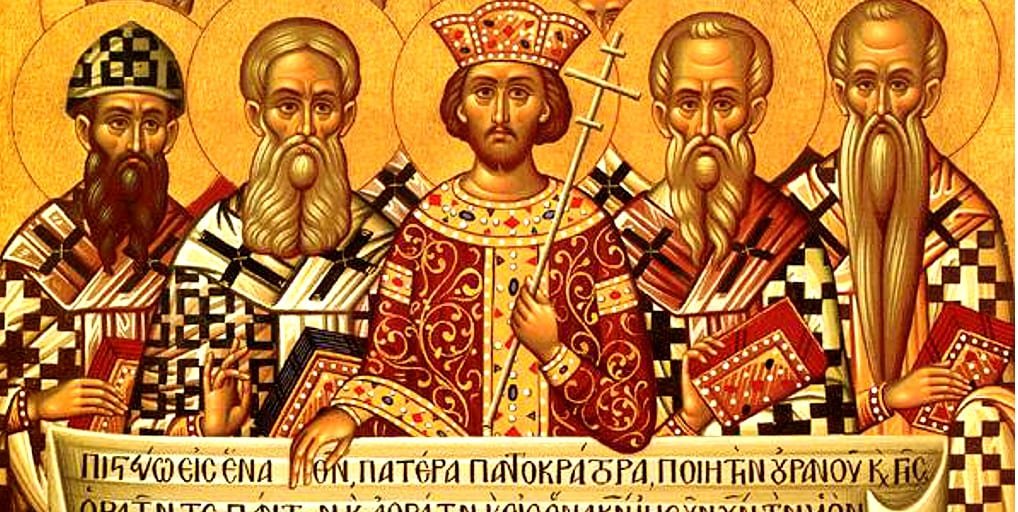
Patristics was something I was never exposed to until I entered seminary. When I had my reversion I wish I knew about the early Church Fathers. Patristics, if you have never heard to term before, simply refers to the writings of the early Church Fathers— those whom the Apostles directly handed down the tradition of Christ’s Church. Some of the early Church Fathers, like St. Clement and St. Ignatius of Antioch, knew the Apostles personally.
On social media I read someone saying how if they had to choose to only read either the Bible or the Church Fathers for the rest of their life, they would choose the Early Church Fathers. Now, if it were up to me, I do not know if I would choose the Church Fathers without hesitation, but I can admit that there is a very strong argument in choosing the Church Fathers. These early Fathers of the Church are so essential to our faith, even thousands of years later, because they experienced the direct transfer of tradition from Christ to the Apostles. They were given the purest of tradition, the most beautiful rock that lacked any blemish. Through each generation thereafter, blemishes appeared and schisms broke off. It was only the early Church Fathers that learned truly, without deceit or the ability to misinterpret, how the Apostles lived out their faith. And, as we know, the Apostles were taught directly by Christ Himself. Through this observation, it should be the logical conclusion that there shouldn’t be much contrast between the teachings of the early Church Fathers and Jesus Christ. It was only the Apostles in between, not centuries and centuries of history.
When I think about Patristics in this sense I find it so hard to believe that there are Christians who reject the teachings of the early Church. They somehow believe they aren’t biblical, or that they even contradict the teachings of Christ. Patristics are the very base of theology. And I would go as far as saying that someone is not truly a theologian until they have learned the teachings of the early Church Fathers. They lived through the earliest years of the Church, and they instilled every belief we believe today.
Because of what they did, we are able to live out the way in which Christ wants us to live— in Him, through Him, and for Him. This is not to say that Scripture is not needed. That is not what I am saying in the slightest. The early Church Fathers relied heavily on Scripture, but as we see in Protestantism today, the Bible can be interpreted in many ways, and with each new interpretation comes the birth of a new denomination, further proving the point that Protestantism will never be unified.
The early Church Fathers were at the base of the true interpretation. There can be many interpretations, but there will always be only one that is true. The true interpretation that Christ intended us to possess. That is precisely why the Patristics are crucial to our faith. They serve as the blueprint to what the Apostles taught and believed. A lot of Church dogma is centered and based around the interpretation of Scripture, but as Scripture tells us, “But there are also many other things that Jesus did; and if every one of them was recorded, I do not think the world itself could contain the books that would be written”(Jn 21:25). The Apostle John implies the necessity of tradition. It is a clear admittance that Scripture is not enough to carry on what Christ taught. Scripture is essential to the Christian faith, but it is not everything. Tradition matters. And the purest expression of this beautiful tradition was given to us by the Apostles, who then gave it to the early Church Fathers.
